


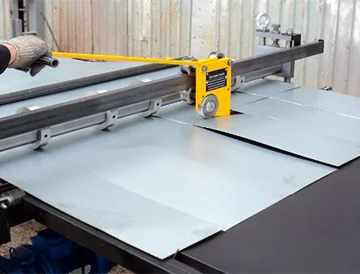
Sheet metal cutting
Sheet metal cutting is a technological process of dividing metal sheets into parts of specified shapes and sizes. This process is one of the most essential and widely used in metalworking and plays a critical role across various industries such as construction, mechanical engineering, aerospace, furniture manufacturing, and equipment production.
There are several common methods of sheet metal cutting:
- Mechanical cutting (shears, guillotines),
- Laser cutting — ensures high precision with minimal material waste,
- Plasma cutting — suitable for various thicknesses and metal types,
- Waterjet cutting — eliminates thermal deformation,
- Oxy-fuel cutting — effective for thick metal plates.
The choice of method depends on the type of metal, sheet thickness, production volume, and desired cut quality.
Advantages of modern sheet metal cutting:
- High precision and processing speed,
- Automation through CNC systems,
- Compatibility with various metals (steel, aluminum, brass, copper),
- Low material waste and clean edges.
Sheet metal cutting is an essential step in preparing components for welding, bending, or assembly. Its efficiency and accuracy make it indispensable in both mass production and custom manufacturing.