




Dental machining work
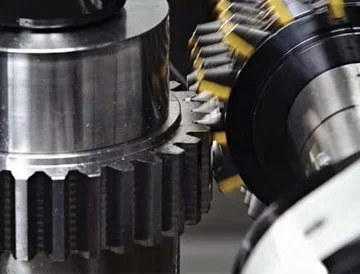
Gear cutting operations refer to the precision machining processes used to create gear teeth on components such as gears, pinions, shafts, racks, and splines. These parts are critical for transmitting torque and motion in mechanical systems and must meet strict dimensional and surface quality standards.
Gear cutting is performed using specialized gear cutting machines, and various techniques include:
- Gear hobbing – using hob cutters to cut teeth on external gears;
- Gear shaping – ideal for internal or external gears, especially with complex profiles;
- Gear broaching – used for mass production of internal gears;
- Gear grinding and shaving – finishing processes to achieve high accuracy and smoothness;
- Gear milling – for prototyping or low-volume production using form cutters.
Modern gear manufacturing relies heavily on CNC gear cutting machines, which ensure precision, repeatability, and the ability to handle complex geometries.
Advantages of gear cutting:
- High precision and consistency;
- Capability to produce both external and internal gears;
- Broad application in industries like automotive, aerospace, robotics, heavy machinery, and power transmission;
- Integration with post-processing like heat treatment and grinding.
Gear cutting is essential in producing gearboxes, transmissions, and motion control components that demand durability and precision.