




Heat treatment of metal
Heat treatment of metal is a group of industrial processes involving the controlled heating and cooling of metals to alter their internal structure and improve mechanical properties such as hardness, strength, toughness, ductility, and wear resistance. It is an essential operation in metallurgy and engineering to ensure materials meet performance standards.
Common types of heat treatment include:
- Annealing – softens metal and relieves internal stresses;
- Normalizing – refines grain structure and improves homogeneity;
- Quenching (hardening) – increases hardness via rapid cooling;
- Tempering – reduces brittleness after hardening;
- Carburizing and nitriding – infuse the surface with carbon or nitrogen for increased surface hardness.
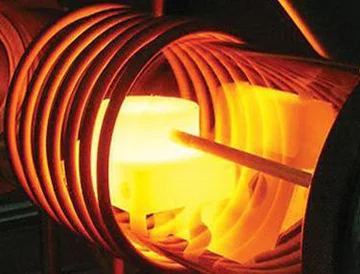
Heat treatment is performed in furnaces (electric or gas-fired) with precise temperature control. Advanced methods such as induction heating, plasma, and laser heat treatment are also used in modern manufacturing.
Key benefits:
- Enhances wear and fatigue resistance;
- Improves dimensional stability;
- Prepares metal for machining or welding;
- Extends service life of components;
- Customizes material properties for specific applications.
Heat treatment is used in industries such as automotive, aerospace, machinery, construction, and tool manufacturing, where material strength and durability are critical.