





Milling processing
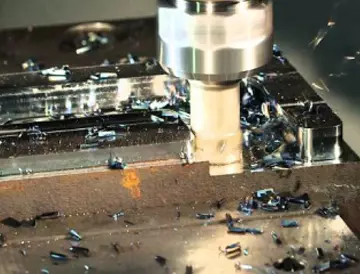
Milling is a mechanical machining process in which a rotating cutting tool called a mill removes material from a stationary workpiece. This method is widely used to create parts with complex shapes, flat or contoured surfaces, slots, holes, and intricate geometries in metals, plastics, and other materials.
Milling operations are performed on milling machines, which can be manual or automated (CNC — Computer Numerical Control). CNC milling machines offer high precision, repeatability, and speed, making them essential in modern manufacturing industries.
Common types of milling:
- Face milling (for flat surfaces);
- End milling (for grooves and contours);
- Angular milling;
- 3D or contour milling (for complex shapes).
Key benefits of milling:
- High accuracy and surface quality;
- Ability to produce both simple and complex parts;
- Compatible with many materials: metals, plastics, composites, etc.;
- Ideal for both one-off and mass production;
- Easily integrated with CAD/CAM systems for automation.
Milling plays a vital role in industries such as aerospace, automotive, mold-making, precision engineering, and mechanical parts production. Its versatility and precision make it a cornerstone of modern manufacturing.