


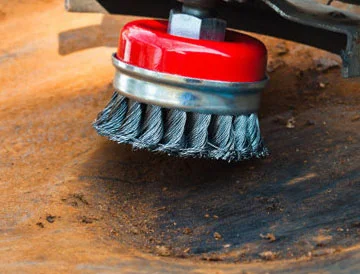
Removal of corrosion
Corrosion removal is a vital maintenance process aimed at restoring metal surfaces damaged by oxidation. Corrosion occurs naturally when metals are exposed to moisture, oxygen, chemicals, or harsh environmental conditions over time. If left untreated, corrosion can weaken structures, cause component failure, and result in costly equipment replacements.
Several methods are used for corrosion removal:
- Mechanical cleaning – using wire brushes, grinders, or sandpaper;
- Abrasive blasting – sandblasting or shot blasting to remove rust and scale;
- Chemical treatment – applying acidic or alkaline solutions to dissolve oxides;
- Thermal techniques – using heat, plasma, or laser to remove corrosion layers.
Once the corroded layer is removed, the metal surface is treated with protective coatings such as anti-corrosion primers, paints, or special sealants to prevent future oxidation.
Benefits of corrosion removal:
- Restores functionality and appearance of metal components;
- Increases equipment life span;
- Prepares surfaces for painting, welding, or coating;
- Reduces maintenance and replacement costs.
Corrosion removal is essential in industrial maintenance, automotive repair, marine engineering, construction, and public infrastructure, where metal longevity and reliability are critical.