





Turning machining
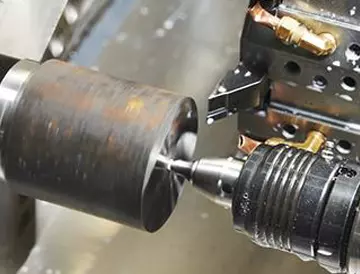
Turning, also known as lathe machining, is one of the most widely used methods in mechanical processing, involving the removal of material from a rotating workpiece using cutting tools. The process is performed on lathes, where the part spins while a stationary cutting tool shapes it into the desired geometry — typically cylindrical, conical, or threaded forms.
Turning operations can be manual (on traditional lathes) or automated using CNC (Computer Numerical Control) machines. CNC turning offers high precision, repeatability, and efficiency, making it essential in industries such as aerospace, automotive, medical equipment manufacturing, and precision engineering.
Key benefits of turning:
- High dimensional accuracy and smooth surface finish;
- Capability to work with a variety of materials: steel, aluminum, brass, plastics, etc.;
- Flexibility in creating parts of different shapes and sizes;
- Suitable for both prototyping and mass production;
- Stable and consistent quality of results.
Turning is a fundamental part of modern manufacturing, allowing for the precise production of shafts, bushings, pulleys, nuts, bolts, and many other components. The quality of turning directly influences the performance and longevity of mechanical systems.