




Cutting of Sheet Metal
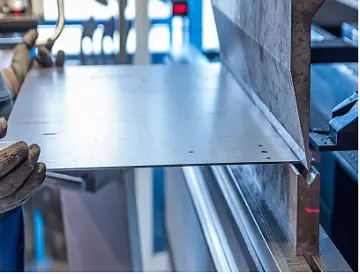
Sheet metal cutting is one of the most fundamental and widely applied processes in industrial manufacturing. It involves separating sheet metal into desired shapes and dimensions using mechanical or thermal methods. Sheet metal is extensively used in automotive, construction, shipbuilding, aerospace, and household appliance production. The purpose of cutting is to remove excess material and obtain components of specific geometry. Traditionally, guillotine shears, mechanical presses, and hydraulic cutters are used. In modern industries, advanced technologies like laser cutting, plasma cutting, and even waterjet cutting are increasingly applied, as they provide superior accuracy, high efficiency, and cleaner cuts. The key requirement during cutting is to avoid distortion or damage to the internal structure of the material. Poor-quality cutting may lead to defects in subsequent processes such as bending, stamping, welding, or painting. Accurate cutting ensures smooth workflow and reduces material waste, making production cost-effective. Despite appearing simple, sheet metal cutting requires skilled operation and precise control. Even a small deviation in dimensions can affect the final assembly of products, especially in industries such as automotive and aerospace where precision is crucial. For this reason, sheet metal cutting is considered not just a preparatory step but a critical operation that influences the durability, quality, and performance of the finished product.