




Contact welding
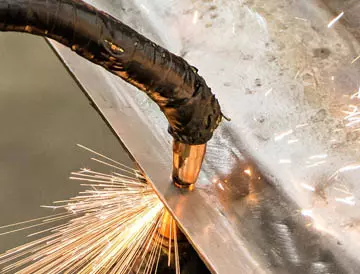
Resistance welding (commonly known as contact welding) is a process of joining metal parts by applying pressure and passing electric current through the joint area, without the use of filler material. The principle of this method is based on the electrical resistance of the materials, which generates heat at the interface, softening the metal so that it can be joined under pressure.
There are several types of resistance/contact welding:
- Spot welding – joins thin sheet metals at discrete points.
- Seam welding – creates continuous, leak-proof joints along a seam.
- Butt welding – connects metal pieces end-to-end with identical cross-sections.
- Projection welding – uses specially designed protrusions to localize the weld.
Advantages of contact welding:
- High production speed,
- Minimal heat-affected zone,
- No need for filler metals or shielding gases,
- Suitable for automation and robotics,
- Clean and consistent welds.
Contact welding is widely used in industries such as automotive manufacturing, aerospace, electrical engineering, and construction. Its reliability, cost-effectiveness, and precision make it ideal for mass production. The resulting welds are strong, durable, and visually clean, which is critical for both structural integrity and product aesthetics.