





Welding of reinforcement
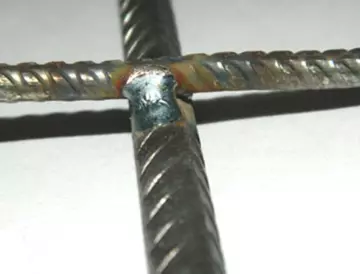
Rebar welding is the process of joining steel reinforcement bars (rebars) to form strong, rigid reinforcing frameworks for use in reinforced concrete structures. It is widely used in the construction of buildings, bridges, tunnels, and other infrastructure where structural integrity is critical.
There are several methods for welding rebar:
- Resistance welding (butt or spot welding) — used in factory settings for mass production,
- Manual arc welding (MMA) — common on construction sites,
- Semi-automatic welding (MIG/MAG) — increases efficiency for large-scale projects,
- Gas welding — rarely used, mainly for repairs or special conditions.
Advantages of rebar welding:
- High structural strength and rigidity of reinforcement cages,
- Accurate positioning and geometry of joints,
- Faster installation compared to wire tying,
- Lower long-term costs due to durability and reduced labor,
- Potential for automation in production environments.
It’s important to consider the type and grade of steel, as not all rebar types are weldable. Welding must comply with local standards (e.g., ASTM, Eurocode, or GOST). Properly welded rebar contributes to the overall strength, durability, and safety of reinforced concrete elements, especially under high stress or seismic conditions.